
- rethink sustainability.
- university of oxford.
lombard odier and the university of oxford.
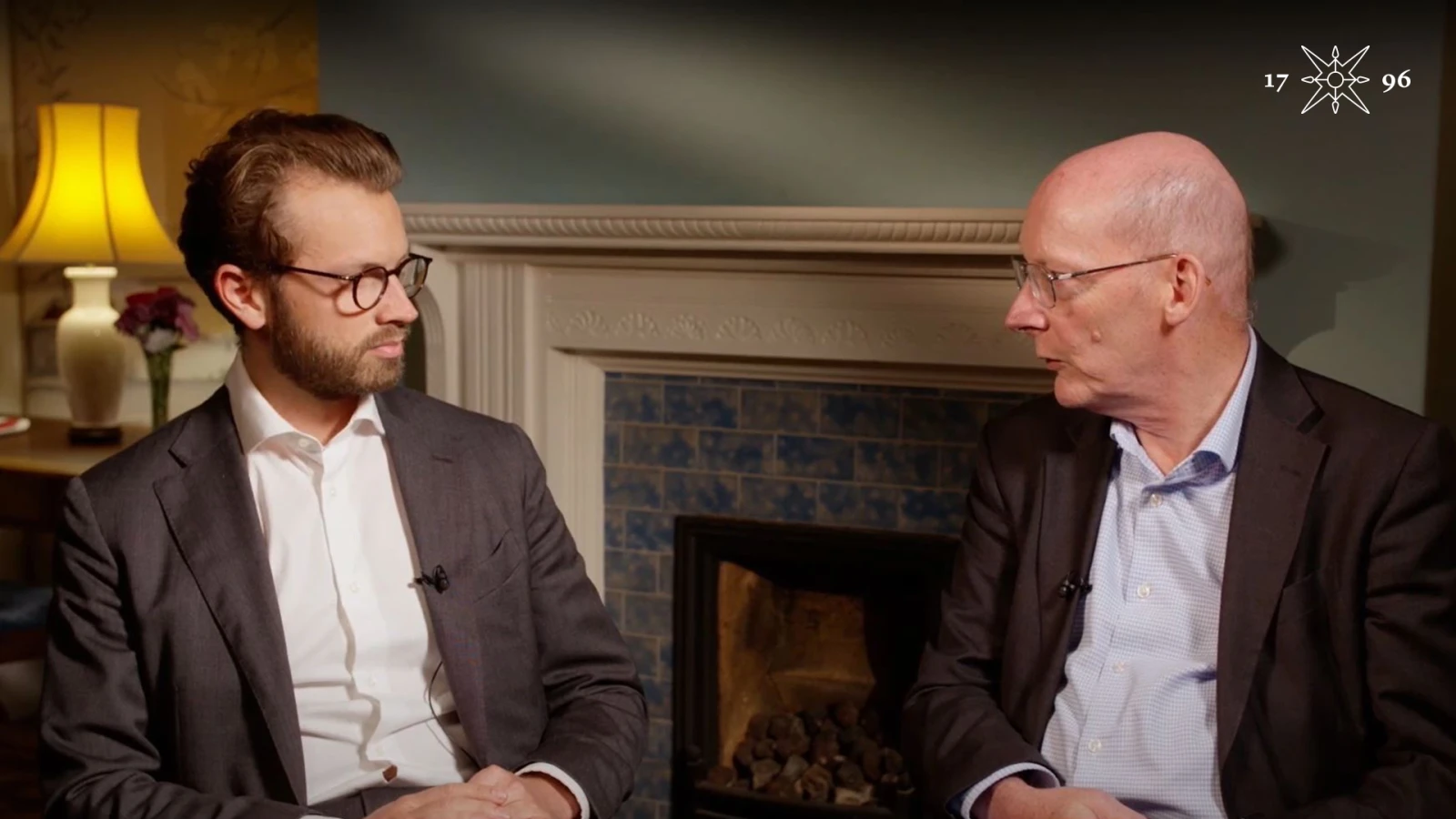
We at Lombard Odier are proud to have signed a multi-year partnership with the University of Oxford to foster research and teaching on sustainable finance and investment, with a particular focus on climate change, circular economy and nature.
Hear more about the partnership between Lombard Odier and the University of Oxford:
let's talk.
thought leaders in sustainable finance.
The partnership between our bank and the University of Oxford has enabled us to endow the Lombard Odier Professorship in Sustainable Finance in perpetuity. This senior academic post, associated with the Director of the Oxford Sustainable Finance Group and based at the Smith School of Enterprise and the Environment (SSEE), is the first position of its kind to be created at any major global research university.
Research is an integral part of our partnership with the University of Oxford, and we are collaborating with Oxford’s researchers to integrate the University’s groundbreaking work into Lombard Odier’s own proprietary research and investment offerings. Lombard Odier and the University of Oxford will also co-host an annual research forum for the broader community of academics and practitioners.
collaborating on groundbreaking new technology.
As the global economy undergoes profound system changes, investors must adapt to capture the opportunities and mitigate the risks of this transition. At Lombard Odier, we believe this requires robust, science-based methodologies that assess how companies and portfolios align with a future economy that is net-zero, nature-positive, socially constructive and digitally enabled.
To support this vision, we began developing our own Implied Temperature Rise (ITR) methodology in 2020. This approach enables investors to assess whether a company’s projected emissions trajectory aligns with international climate goals – and whether it remains a compelling investment in the context of the transition to a net-zero emissions energy system. That same year, our methodology was independently peer reviewed by climate scientists, economists and sustainable finance experts at the University of Oxford. Their input played a key role in helping us improve and refine our models.
We have also collaborated with researchers in the Oxford Sustainable Finance Group on a white paper, published in July 2021, on how to design temperature alignment metrics for net-zero system change investments. In addition, we launched four ITR-based strategies that enable investors to design net zero-aligned equity and fixed-income portfolios without compromising on diversification.
Finally, this valuable partnership is enabling us to share this pioneering research with our clients through dedicated joint Lombard Odier–University of Oxford Executive Education courses, as well as with students of the newly launched MSc in Sustainability, Enterprise and the Environment at the SSEE.
predictors of success in a greening world: a lombard odier – smith school report.
One key output from this partnership was ‘Predictors of Success in a Greening World’, a November 2021 report produced by Lombard Odier and the University of Oxford’s SSEE. The report presents a global overview of the international trade in green, high-growth industries spanning 25 years, along with analysis on how countries are doing when it comes to their spending on ‘building back greener’ from Covid-19.
Predictors of Success in a Greening World
To do this, we used two frameworks to assess each country. First, the Green Complexity Index measures the extent to which countries are capitalising on the green transition, as indicated by the number and complexity of green products they export and, therefore, their green competitiveness past and present. Second, the Green Complexity Potential (GCP) index measures the extent to which countries could capitalise on the green transition, as indicated by each nation’s average relatedness to complex green products they don’t yet export competitively. Crucially, GCP is a strong indicator of a country’s future GCI score. And, together, GCI and GCP can highlight opportunities to invest in the transition to more sustainable energy and production systems worldwide.


The report found that, thanks to their existing capabilities in green manufacturing and other technologies, China, Germany, and the US are set to be the transition’s biggest winners. Meanwhile, because of a lack of political support and ambition, countries like Australia and Brazil are lagging behind. Even so, the considerable renewable energy endowment of these two countries lends them a sizeable potential competitive advantage going forward.
In a dynamic competitive landscape, how countries are approaching their pandemic recovery spending is an important factor that could affect their green trajectory. For example, although some countries, such as Italy and the US, are ranked highly on the GCI, their low green recovery spending could lead to their being overtaken in the future by countries that are already more focused on the transition. Further, some countries’ future GCI rankings face risks from trade tensions between other high-ranked nations on whose exports they depend for enabling their own green transition.
our expertise.
where we are.
Our heritage is Swiss, yet our outlook and mind set are resolutely international. With over 25 offices globally, we are able to serve our clients all over the world.

get in touch.
Our experts will answer to your request as soon as possible.